Swarf Under Yer Fingernails: How the Black Country Apprenticeship Forged Better Humans Than Any Lecture Theatre Ever Could
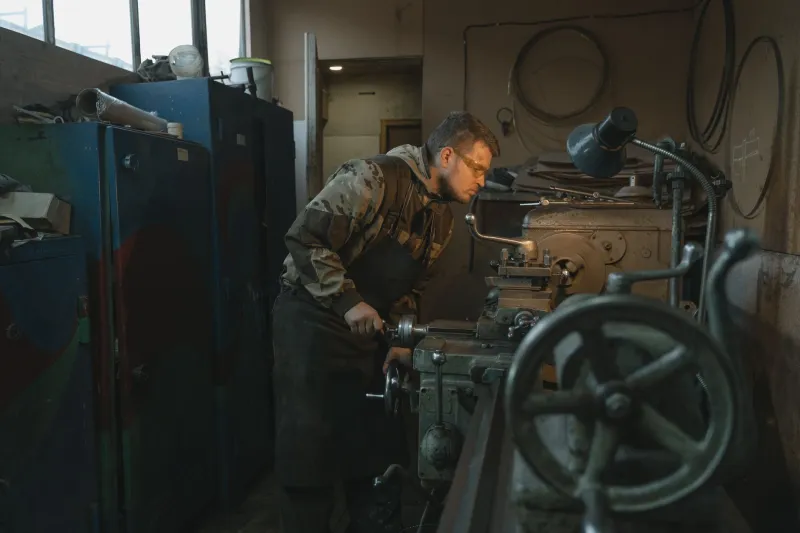
There's a particular kind of knowledge that can't be written in a textbook. It lives in the hands. It sits in the gut. It comes from standing next to somebody who's done a thing ten thousand times and watching, absorbing, making yer own mistakes while somebody who actually knows summat is close enough to stop yer losing a finger.
The Black Country has always understood this. Long before 'experiential learning' became a buzzword for consultants to put on PowerPoint slides, the region was running one of the most effective educational systems Britain has ever produced — and it didn't require a single UCAS form.
The School That Never Had a Name
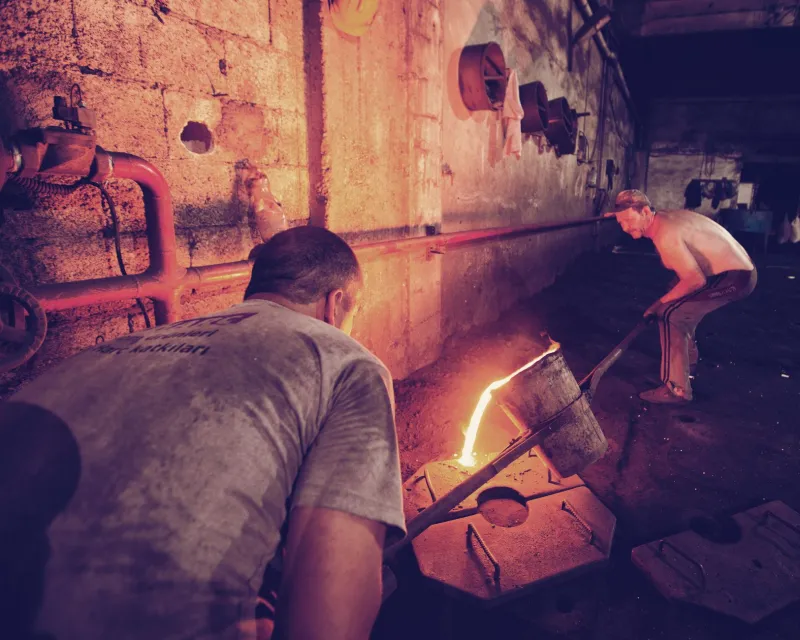
Ask any bloke or wench of a certain age from Dudley, Walsall, Wolverhampton, or the Black Country's sprawling in-between bits, and they'll tell yer the same story. Fourteen, fifteen, sixteen years old. Done with school. Into the workshop, the foundry, the toolroom, the forge. Paired up with a tradesman who'd been doing the job since before yer mum were born. And learning — properly learning — from the first day.
It worn't glamorous. The hours were long, the language were colourful, and if yer messed something up, yer heard about it in terms that would make a modern HR department weep. But here's the thing: yer remembered it. Yer didn't forget the lesson because the lesson came with consequences. Real ones. A weld that failed weren't a mark in a book — it were a problem that needed fixing, and yer were the one who'd be fixing it.
That's the difference, and it matters more than people give it credit for.
Graft First, Theory After
Take Gary Westwood, fifty-three, who runs a precision engineering firm out of Brierley Hill. He started his apprenticeship at sixteen in the early 1980s, working under a toolmaker called Derek who, by Gary's account, 'could measure summat by eye that most blokes couldn't get right with a micrometer.'
'What Derek gave me,' Gary says, leaning back in his chair surrounded by the comfortable clutter of a workshop that clearly gets used, 'worn't just the technical stuff. It were the way of thinkin'. If summat doh work, yer doh go home — yer figure it out. Yer try this, yer try that. Yer use yer loaf. Nobody's comin' to rescue yer.'
He's not anti-education, Gary. Two of his own kids went to university and he's proud of 'em for it. But he's clear-eyed about what he got from his apprenticeship that no degree could have given him: the ability to solve a problem in the real world, under pressure, with the tools actually available to him — not the theoretical tools he wished he had.
'Half the graduate engineers I've interviewed over the years,' he says, choosing his words carefully, 'am brilliant on paper and absolutely bloody useless when summat goes wrong that worn't in the module.'
A Tradition as Old as the Smoke
The Black Country's apprenticeship culture didn't emerge from nowhere. It grew organically out of the region's industrial identity — the chain shops, the glassworks, the ironmasters, the nail-makers working from back-garden workshops before the factories swallowed everything up. Skills were currency. Passing them on was both practical necessity and a form of cultural pride.
A master chainmaker didn't just teach a youngster how to weld a link. He was handing over a piece of himself — a way of being in the world, a standard of craft that had his name attached to it by association. The apprentice, in turn, carried that standard forward. It was a transmission of identity as much as it was job training.
That's why Black Country tradespeople of older generations often speak about their gaffers with a reverence that sounds almost filial. 'He were like a second father to me' is a phrase you'll hear more than once if yer start asking around. Harsh, sometimes. Demanding, always. But invested in yer in a way that felt genuine, because yer success reflected on them.
What Got Lost — and What Didn't
The decline of manufacturing through the 1980s and 90s took a wrecking ball to the formal apprenticeship pipeline. Workshops closed. Skills retired with the men and women who held them. An entire ecosystem of learning by doing was quietly dismantled while politicians argued about retraining schemes that mostly trained people for jobs that didn't exist yet either.
But — and this is the bit that deserves saying out loud — the ethos didn't entirely disappear. It went underground. It adapted.
Sarah Bickley, who runs a successful tiling and interior fit-out business from Oldbury, never did a formal apprenticeship. But she'll tell yer, without hesitation, that she learned everything she knows from working alongside her uncle on weekends from the age of fourteen, mixing grout and watching joints and being told, repeatedly, that 'if it ay straight, it ay done.'
'I've got two lads working for me now,' she says. 'One's got a construction management degree. One left school at sixteen and came to me. I'm not saying the degree lad is useless — he's not, he's great with the clients and the paperwork. But the other one? He can look at a wall and tell yer something's off before he's even measured it. That's not learned in a classroom. That's just hours.'
The Credential Obsession and Its Discontents
Modern Britain has developed a curious fetish for qualifications. Not knowledge, necessarily — qualifications. The piece of paper. The letters after the name. The LinkedIn badge that says yer completed a six-week online course in 'Strategic Leadership Fundamentals.'
Nobody in the Black Country's workshop tradition was ever that fussed about the certificate. What mattered was whether yer could do the job. Whether the thing yer made would hold. Whether the person who taught yer would be proud to put their name next to yers.
There's a growing body of evidence — and a growing chorus of employers — suggesting that the credential obsession has produced a generation of over-qualified, under-prepared workers who are brilliant at navigating institutional systems and somewhat less brilliant at doing actual things. The Black Country, with its long memory and its healthy scepticism of anything that smells like showing off, has been making this point for decades. It's just that nobody particularly listened until the skills shortage started biting hard enough to make the news.
The Comeback Nobody Planned
Here's the quietly encouraging bit. Apprenticeships are back — genuinely back, not just as a political talking point. Levy-funded schemes, degree apprenticeships, trailblazer programmes in engineering, construction, digital trades. The language has changed, the paperwork has multiplied, but the core idea — learn alongside someone who knows what they're doing, in a real environment, doing real work — is the same one that built this region's identity.
And in the Black Country, there's something that feels like recognition. Like the rest of the country has finally caught up with what were obvious all along.
Yer doh need a certificate to know what yer doing. Yer need swarf under yer fingernails, a gaffer who pushed yer harder than yer thought yer could go, and the quiet confidence that comes from having made something — something real, something that works — with yer own two hands.
That's an education. Proper one, an' all.