Comin' 'Om: The Young Black Country Folk Who Left, Came Back, and Ay Leavin' Again
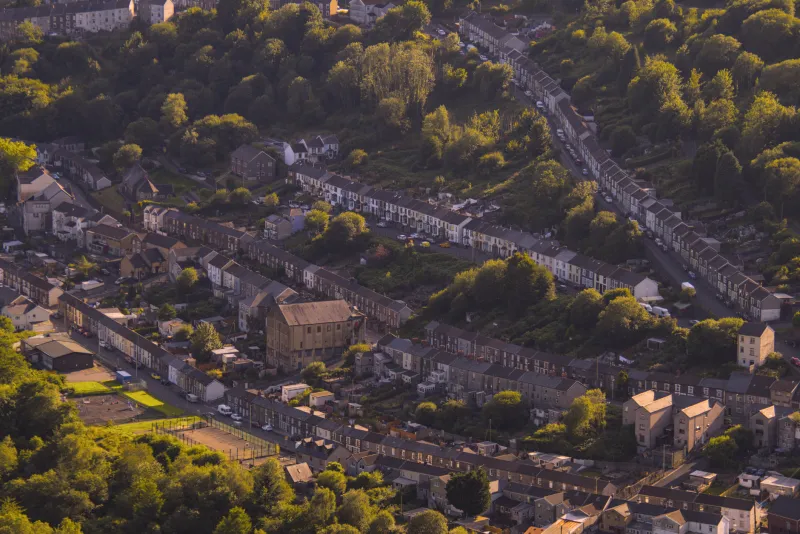
There's a particular kind of conversation happening at kitchen tables and in pub snugs across the Black Country right now. It goes something like this: someone who moved away — to London, Manchester, Birmingham, wherever — has come back for a visit, and somewhere between the second pint and the plate of chips, they say it. "I'm thinking of moving back."
And nobody laughs. Because everyone at that table has either already done it, or is seriously considering it.
The Black Country has always had a complicated relationship with departure. Generations of young people left — for work, for opportunity, for the simple thrill of somewhere that wasn't here. And for a long time, coming back carried a faint whiff of defeat. Not anymore. Something has genuinely shifted, and the people driving it are sharp, ambitious, and absolutely fed up with paying London prices to live in a flat the size of a wardrobe.
The Numbers Tell a Story
You don't need to commission a research study to spot the trend — though the data does back it up. House prices in Dudley, Walsall, and Wolverhampton remain dramatically lower than in comparable urban areas, and with remote and hybrid working now a permanent fixture for huge swathes of the professional workforce, the old logic — you have to live where the jobs are — simply doesn't hold in the way it once did.
According to Rightmove data analysed over recent years, searches for properties in the West Midlands from people currently registered in London postcodes have risen consistently. Estate agents in the Black Country report increasing enquiries from buyers in their late twenties and thirties looking for terraced houses and semis with gardens — the kind of properties that would cost half a million in zone three but are available here for a fraction of that.
But it would be reductive to frame this purely as an economic calculation. Talk to the people who've actually made the move, and the financial relief — real as it is — turns out to be only part of the picture.
"I Forgot How Much I Missed Just... Knowing People"
Jade Hartley, 31, spent seven years in London working in digital marketing before moving back to her hometown of Tipton eighteen months ago. She's now working fully remotely for the same company, from a three-bedroom house with a garden that cost her less than her old London studio flat.
"Everyone assumes it was just about the money," she says, sat in a cafe in Dudley town centre she's been coming to since she was a teenager. "And yes, obviously the housing thing is massive. But honestly? I forgot how much I missed just knowing people. In London I could go a whole weekend without having a proper conversation. Here I can't go to the shop without bumping into someone I went to school with. At first I thought that would drive me mad. It doesn't. It's actually really lovely."
Her experience echoes that of dozens of people we spoke to for this piece. The word that comes up again and again — unprompted — is community. Not in a vague, abstract sense, but in the specific, tangible way that manifests as a neighbour who checks in on you, a local pub where you don't have to explain your order, a sense of being known.
The Dialect as Anchor
There's something else, too, that's harder to quantify but impossible to ignore: the pull of the dialect itself. Black Country speech — that distinctive, ancient tongue with its roots in Mercian Old English — functions as a kind of cultural anchor. People who've spent years softening their vowels and editing their vocabulary to fit in elsewhere describe a physical relief in being able to speak naturally again.
"I didn't realise how much energy I was spending," admits Ryan Poole, 28, who returned to Wednesbury after four years in Bristol. "Not just code-switching at work, but all the time. Making myself sound more neutral. Down here I just talk, and nobody bats an eye. It sounds daft, but it makes a massive difference to how comfortable you feel in your own skin."
This isn't a small thing. Linguistic identity is deeply tied to psychological belonging, and for Black Country folk — whose dialect has historically been mocked and dismissed — being able to use it freely, without self-consciousness, carries real emotional weight.
What's Changed (And What Hasn't)
It would be dishonest to pretend the Black Country is without its challenges. Town centres that lost their retail anchors during the long decline of the high street are still finding their feet. Public transport remains patchy in places. And there's a persistent narrative — often pushed from outside — that the region is somehow left behind, struggling, diminished.
The people coming back reject this framing, often with some heat.
"There's this London-centric view that if you're not in the capital you're somehow settling for less," says Priya Sandhu, 34, who moved from Canary Wharf back to Walsall two years ago and now runs a small consultancy from her home. "But I'm working with the same clients, doing the same quality of work, living in a house I actually own, with a ten-minute commute when I do need to go somewhere. Who's settled for less?"
She's also noticed a growing creative and entrepreneurial energy in the area — independent businesses opening, arts projects gaining traction, young people investing in local rather than simply passing through. "There's a generation who grew up here, went away, learned things, and came back with all of that. That's genuinely exciting for the region."
A New Chapter, Written in the Same Accent
What's emerging in the Black Country isn't a gentrification story — it's something more interesting and more authentic than that. It's people who belong here, returning to a place they understand in their bones, and choosing to invest their futures in it rather than somewhere that never quite felt like home.
The boomerang generation — as some are calling them — aren't coming back out of failure or resignation. They're coming back with clarity. With perspective. With a renewed appreciation for something they perhaps took for granted when they were younger.
And they're staying.
The Black Country has always been a place that made things. Right now, it's making something new — a future built by people who know exactly where they come from, and have decided that's precisely where they want to be.
Welcome 'om, bab. You've been missed.