Gone But Never Forgotten: 10 Black Country Legends That Time (and the Wrecking Ball) Took from Us
There's a particular kind of grief that Black Country folk know well. It doesn't come with condolence cards or a casserole from the neighbours. It comes on a Tuesday morning when you drive past a patch of scrubland and remember — really remember — that there used to be something there. A pub where your grandad drank. A factory where your mum worked her first job. A market where everything smelled of frying onions and possibility.
Deindustrialisation didn't just reshape the Black Country's economy. It took a sledgehammer to its social fabric, knocking down the physical spaces where community happened — where people fell in love, fell out, found work, found themselves, and found a reason to get out of bed on a grey Monday morning.
This is for all of it. All of them. The lost places that made us.
1. The Round of Beef, Dudley
Ask anyone of a certain age in Dudley about the Round of Beef and watch their face do something complicated. Tucked into the heart of the town, this was a pub that felt like it had grown organically from the ground rather than been built — all dark wood, improbable corners, and a landlord who knew your order before you'd reached the bar.
It was demolished as part of the Dudley town centre redevelopment that swallowed several beloved boozers whole. In their place came car parks and retail units that have themselves since emptied out, which feels like a particularly cruel joke.
"My dad proposed to my mum in the Round of Beef," remembers Terry Hodgetts, 71, from Netherton. "She said yes, obviously, or I wouldn't be here to tell you. But every time I go past where it was, I think — that's where I technically started. There's a bloody Poundland there now."
2. Chances Glassworks, Smethwick
For over 150 years, Chances Brothers Glassworks in Smethwick was one of the most significant industrial sites in the world. This was the factory that made the glass for the Crystal Palace in 1851. The glass for lighthouses that guided ships safely home. The glass for the Great Exhibition that showed Victorian Britain off to the world.
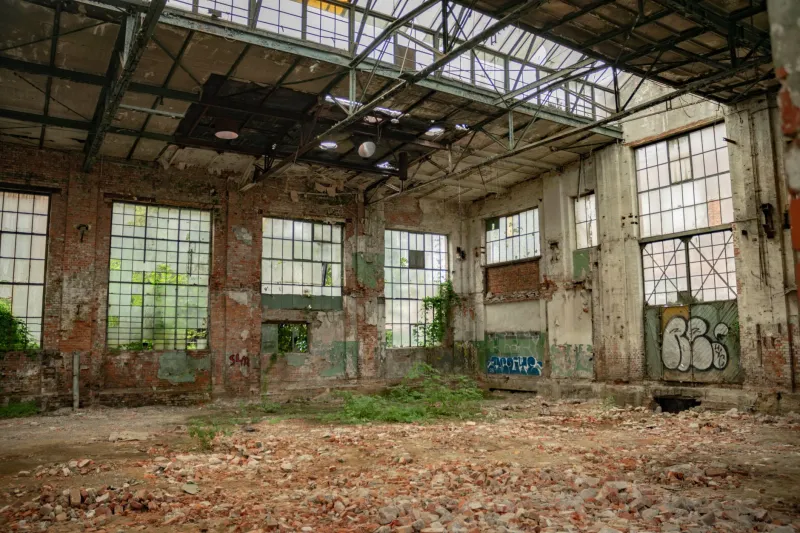
The site closed in 1981, a casualty of the same brutal industrial contraction that stripped the Black Country of its manufacturing soul. Parts of the Victorian buildings lingered for years in various states of dereliction — long enough for a generation to grow up treating them as adventure playgrounds — before being cleared for housing development.
A small heritage plaque now marks what was there. A plaque. For a place that literally helped light up the world.
3. Woolworths, Every High Street (You Know the One)
Okay, Woolworths wasn't unique to the Black Country — but the way we mourned it absolutely was. When the chain collapsed in 2008, Black Country high streets lost something that had anchored them for decades. The pic'n'mix counter alone was a civic institution. Children negotiated their pocket money around it. Romances began over the shared agonising choice between cola bottles and white mice.
Sandra from Tipton still hasn't forgiven the administrators. "I bought my kids' school uniforms there, their first records, their Christmas presents. It was where you went. I don't care if it sounds daft — I cried when it shut. Proper cried."
It doesn't sound daft, Sandra. It sounds exactly right.
4. The Old Whimsey, Brierley Hill
Named after the winding engine ('whimsey') that once stood nearby — a reminder of the collieries that predated even the ironworks — the Old Whimsey was a pub with history baked into its very name. It served as an unofficial community centre for the surrounding streets: a place for dominoes leagues, darts competitions, impromptu wakes, and the kind of long Sunday afternoon conversations that solved nothing and meant everything.
The building was demolished in the 1990s. The land sat empty for years. The dominoes league disbanded. The darts players drifted to other pubs, which have since closed themselves.
5. Beatties Department Store, Wolverhampton
Beattie's was Wolverhampton's answer to Harrods — or at least, that's how it felt if you were nine years old and your mum was taking you to see Father Christmas on the top floor. Founded in 1877, it was a proper department store in the grand tradition: multiple floors, a restaurant that smelled of soup and respectability, and a toy department that could reduce grown adults to childlike wonder.
The store limped through various ownership changes before finally closing for good in 2021, another retail casualty of a high street model that had stopped working. The building still stands, at least — which is more than can be said for some entries on this list — but it's been carved up and repurposed in ways that would make old Henry Beattie weep into his Victorian whiskers.
6. Round Oak Steelworks, Brierley Hill
If the Black Country had a beating industrial heart, Round Oak was part of it. The steelworks dominated the Brierley Hill skyline for over a century, employing thousands and defining the rhythm of life for entire communities. You knew when the shifts changed. You knew when there was trouble. The works were woven into the social fabric so tightly that when they closed in 1982, it wasn't just jobs that were lost — it was an entire way of structuring time and meaning.
The site is now the Merry Hill Shopping Centre. Make of that what you will.
"My grandad worked at Round Oak for forty years," says Diane Price, 58. "When they closed it, he didn't know what to do with himself. Literally didn't know. He'd organised his whole life around that place. A lot of men in this area were the same. It broke something in them."
7. The Plaza Cinema, Old Hill
Before the multiplex, before streaming, before anyone had heard of Netflix, there was the Plaza. And the Odeon. And the Gaumont. And half a dozen other picture houses scattered across the Black Country that made cinema a genuinely communal experience — sticky floors, unreliable projectors, and an usherette with a torch who'd shush you with terrifying authority.
The Plaza in Old Hill closed in the 1970s, as did most of its contemporaries across the region. Some became bingo halls. Some became snooker clubs. Some became rubble. All of them took with them the particular magic of watching something enormous on a screen in the dark, surrounded by your neighbours.
8. Cradley Heath Chainworks
Cradley Heath was the chainmaking capital of the world. That is not hyperbole — this small Black Country town produced the anchor chains for the Titanic, among countless other vessels, and the women chainmakers here led one of the most remarkable industrial strikes in British history in 1910, winning a minimum wage against ferocious opposition.
The chainworks have gone. The skills have largely gone. But the story — particularly the story of those women — deserves to be shouted from every rooftop. If you don't know about Mary Macarthur and the Cradley Heath chainmakers, stop reading this and go and find out. We'll wait.
9. The Crooked House Pub, Himley
Oh, this one still smarts. The Crooked House — officially the most wonky pub in Britain, a genuine geological marvel that leaned at impossible angles due to mining subsidence beneath it — burned down in suspicious circumstances in August 2023, and was demolished within days before any preservation order could be applied. The speed of its demolition prompted widespread outrage and a police investigation.
It had stood since 1765. It survived two centuries of industrial upheaval, two world wars, and the entire collapse of the regional economy. And then, in 2023, it was gone in a weekend.
Some losses feel like accidents. Some feel like something else entirely.
10. The Old Market Hall, Walsall
Markets are democracy in physical form — a place where everyone, regardless of means or status, comes to the same space and rubs shoulders over the same cabbages and knock-off trainers. Walsall's old market hall was that, and more. It was noise and colour and the smell of fresh bread and cheap perfume and the particular chaos of a hundred stalls competing for your attention at once.
Regeneration has transformed the market offer over the decades, and not always for the worse — but something of the old, unruly, gloriously impractical character has been smoothed away in the process.
Maureen Timmins, 74, who sold fabric from a stall there for twenty-three years, puts it this way: "The new market's very nice. Very clean. But clean isn't always the same as alive, is it?"
What We Owe the Lost Places
None of this is simple sentiment. The Black Country was reshaped by forces — economic policy, corporate decisions, political choices — that were largely made elsewhere, by people who didn't live here and wouldn't have to live with the consequences. Deindustrialisation wasn't an act of God. It was an act of governance.
But the spaces themselves — the pubs and the works and the cinemas and the markets — those were ours. Built by us, sustained by us, beloved by us. And remembering them isn't just nostalgia. It's a form of insistence: that these places mattered, that the lives lived in them mattered, and that the communities they held together were worth something.
They still are.
Ta-ra, all of ya. You'm not forgotten.