Faggots, Fittle, and Proper Flavour: Black Country Grub Is Back on the Menu
For generations, Black Country folk have been quietly doing what they've always done best — feeding people well, without fuss, without pretension, and without charging fifteen quid for a portion that'd leave a sparrow peckish. But something's shifting. The food that once got dismissed as 'peasant grub' by the kind of people who think a smear of sauce on a slate constitutes a meal is now drawing proper attention. Chefs are shouting about it. Food writers are making pilgrimages. And the locals? They're chuffed — though not entirely surprised.
Black Country cuisine was never the problem. The problem was who got to decide what counted as 'real' food.
What Even Is Black Country Food?
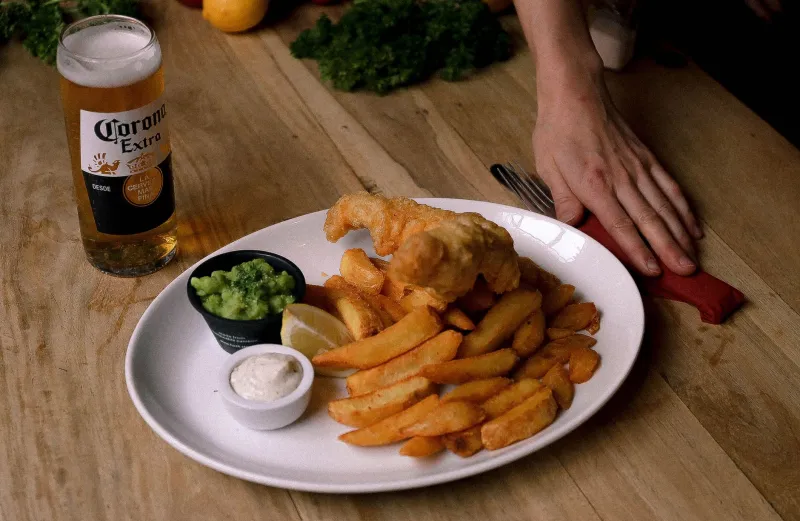
If you've grown up in Dudley, Walsall, Wolverhampton, or the wider West Midlands heartland, you already know. But for the uninitiated: think faggots swimming in thick, dark gravy, served with a mound of mushy peas. Think the batch — that soft, floury bread roll that's the backbone of every proper cob shop in the region. Think grey pays (that's grey peas to anyone not from round 'ere), doused in vinegar and sold from a cup on market day. Think chip shop chips that are actually chips — not skinny little twigs that go cold before you've crossed the car park.
This is food built for people who grafted. The Black Country's industrial past — the ironworks, the glassworks, the chainmakers — demanded serious calories and serious comfort. The food delivered both. And now, after decades of being overlooked in favour of London's latest obsessions and the endless parade of street food trends, it's getting its moment.
The Chefs Leading the Charge
Kerry Rollason, who runs a small supper club out of Brierley Hill, has been cooking traditional Black Country recipes for the past six years — and she's noticed a definite change in how people talk about what she serves.
"When I started, folk would come along almost embarrassed," she says, laughing. "Like they were sneaking off to eat their nan's food in secret. Now they're posting it all over Instagram and telling their mates in London they've had the best meal of their lives. The faggots especially — people go absolutely mad for them."
Kerry sources her pig offal from a butcher in Cradley Heath whose family has been in the trade for three generations. Her recipe, passed down from her grandmother, involves a spice blend she's not giving up without a fight. "There's a reason every family's faggots taste slightly different," she says. "That's the whole point. It's not a chain restaurant dish. It's personal."
Over in Sedgley, chef and food historian Marcus Trow has been running pop-up dinners centred entirely on pre-war Black Country recipes, some of which he's spent years tracking down through local archives, church cookbooks, and conversations with elderly residents. His menus have featured grey pays with pickled onions, stewed tripe with onion gravy, and a bread pudding so dense and magnificent it practically constitutes a structural material.
"People think working-class food is simple," Marcus says. "And in some ways it is — it has to be, because it was made with limited ingredients and not much time. But the skill involved is enormous. Getting faggots right, getting the gravy right, getting a batch to rise properly — that's craft. It just doesn't look flashy, and that's why it got overlooked."
The Batch: An Unsung Hero
No conversation about Black Country food is complete without a proper tribute to the batch. Not a bap. Not a cob. Not a bun. A batch — and if you call it anything else in the wrong postcode, you'll know about it.
Local bakeries have seen a resurgence of interest in traditional batch-making, with younger bakers deliberately moving away from the sourdough-everything trend and back towards the soft, pillowy rolls that have been a regional staple for well over a century. The Tipton-based Groat's Bakehouse, run by siblings Diane and Paul Groat, started selling at local markets two years ago and now has a waiting list for their Saturday batch deliveries.
"We never thought it would take off like this," admits Diane. "We just wanted to make proper batches like our dad used to. Turns out there's a massive appetite for it — pun intended."
Chip Shop Culture: A Sacred Institution
Ask anyone who grew up in the Black Country where they'd go for their last meal, and a significant percentage will name their local chippy without hesitation. The chip shop here isn't just a takeaway — it's a community institution, a social hub, and, on a Friday night, practically a religious experience.
But the traditional chippies face real pressures: rising oil costs, changing eating habits, and competition from every conceivable fast food format. What's heartening is how many are fighting back not by chasing trends, but by doubling down on quality and tradition.
Shelly Phipps, whose family has run a chippy in Oldbury for over forty years, says the secret is stubbornness. "We still use beef dripping. We still cut our own chips from proper potatoes. We don't do loaded fries or whatever it is people are selling now. And people come from miles away for it, because you can't fake that flavour."
Food tourists — yes, they exist, and yes, they're coming to the Black Country — have started including traditional chippies on their itineraries alongside breweries and heritage sites. It's a sign of something genuinely shifting in how outsiders perceive the region's food culture.
More Than Nostalgia
What makes this resurgence interesting is that it's not just about looking backwards. It's about reclaiming the right to say: this food is good, it has value, and it belongs in the conversation about what British cuisine actually is.
For too long, the cultural gatekeepers of food media decided that authentic British cooking meant Scotch eggs from a deli in Notting Hill or a gastropub pie with a craft ale recommendation. The Black Country's food — rich, unfussy, deeply rooted in community and labour — barely got a look-in.
That's changing. And if you want proof, just try getting a table at one of Kerry Rollason's supper clubs without booking three weeks in advance.
The faggots, as they say, are having their moment. And it's about bloody time.