Many Strings to a Black Country Bow: The Working Folk Who Were Running Side Hustles Before Silicon Valley Could Spell 'Entrepreneur'
Somewhere right now, a twenty-something with a ring light and a Substack newsletter is explaining to their followers what a side hustle is. They'll talk about passive income, about diversifying revenue streams, about building a personal brand. They'll probably credit some American tech bro with inventing the concept around 2010.
Meanwhile, the ghost of every Black Country nail maker, chain worker, and glasscutter who ever lived is rattling their chains in collective outrage.
Because if you want to find the true birthplace of the side hustle — not the hashtag, not the podcast, the actual thing — you want to be looking at the terraced streets of Dudley, Tipton, Cradley Heath, and Wednesbury. Specifically, you want to be looking at the people who lived there across the last two centuries and never, not once, had the luxury of relying on a single wage.
When the Gaffer's Word Weren't Worth Tuppence
The industrial Black Country was built on precarity. That's the word historians use. The people who lived it used different words, most of which we can't print here.
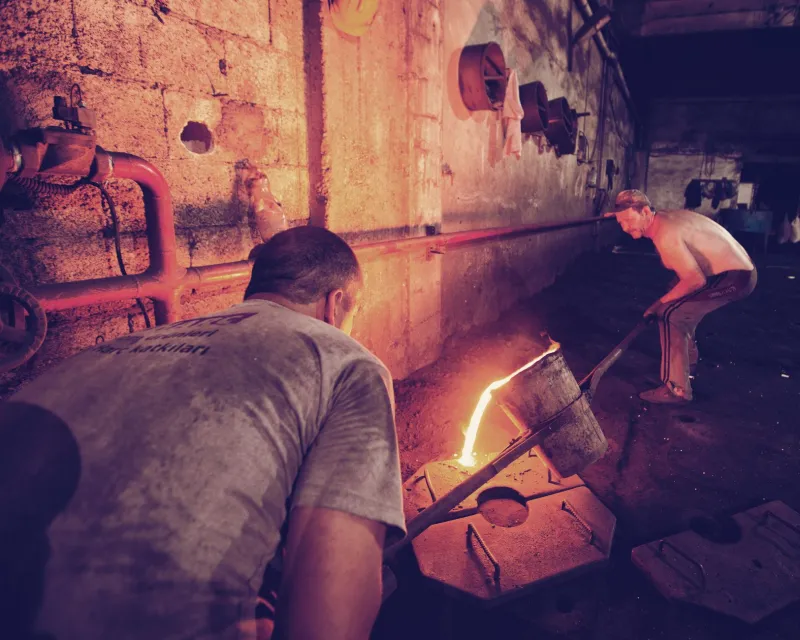
Work in the foundries, the chainshops, the glassworks — it came and went. Seasonal slowdowns, trade downturns, the gaffer deciding he could get it done cheaper elsewhere. A family that depended entirely on one income stream wasn't being naive. It was being reckless. And Black Country folk were many things, but reckless with their family's survival they were not.
So they did what made sense. They found another string for the bow.
The bloke who worked the rolling mill Monday to Friday was also the bloke who kept half a dozen pigs at the bottom of the yard and sold cuts to the neighbours come autumn. His wife took in mending. Their eldest did a newspaper round and then, later, fixed bikes for a few bob a time in the back entry. Nobody called any of this entrepreneurship. It was just what you did. It was just sense.
The Allotment Economy Nobody Wrote a Book About
If you want a masterclass in vertical integration, look no further than the Black Country allotment holder of the mid-twentieth century. Grow the veg, sell the surplus at the factory gate on a Friday. Save the seed, swap it with the bloke three plots over who's growing something you ay got room for. Keep chickens, sell the eggs to the woman on the corner who can't keep her own. Brew a bit of something in the shed — not for sale, obviously, wink wink — and let the neighbours show their appreciation in kind.
This wasn't hobbyism. This was a shadow economy operating in plain sight, held together by trust, reciprocity, and the unspoken understanding that everybody needed everybody else to get on.
The allotment wasn't just a patch of earth. It was a balance sheet.
Pigeons, Syndicates, and the Original Crowdfund
Then there were the pigeons.
Racing pigeons in the Black Country wasn't merely a hobby — it was a financial instrument. The serious fanciers ran informal syndicates. You'd put in your share, the bird raced, the prize money got divided. If your bird was good enough, you hired it out for stud. You sold the youngsters. You traded bloodlines like a commodities broker trades futures, except you did it over a cup of tea in a loft that smelled of sawdust and bird muck, which is arguably a more honest environment than the City of London.
The pigeon men understood risk pooling. They understood asset appreciation. They understood that a network of trusted relationships was worth more than any single transaction. They just didn't have a LinkedIn profile to put it on.
The Knowledge That Got Passed Down Without a Name
Here's the thing that gets overlooked in every breathless article about the gig economy: the Black Country version of this multi-income life wasn't a choice made from ambition. It was a survival strategy forged in necessity. But survival strategies, practised long enough, become culture. They get passed down. Not in textbooks — in behaviour, in attitude, in the way a grandad teaches a grandkid to always have a skill that somebody will pay for, even if it's just sharpening lawnmower blades in the summer.
"Our nan used to say you should never have just the one way of bringing money in," says Chantelle, 29, from Oldbury, who now runs a cleaning business alongside her day job in logistics. "She said it like it were obvious. Like only a fool would put all their eggs in one basket. I didn't realise until I were older that she were basically describing what everybody's now calling a side hustle."
That gap — between what grandparents practised and what a new generation is now naming — is where something interesting is happening.
The New Generation Connects the Dots
Younger Black Country creators and entrepreneurs are increasingly looking back at their family histories and recognising the template. The TikToker who runs a small print-on-demand shop alongside their content. The tradesperson who's also flogging homemade hot sauce at the weekend market. The warehouse worker doing car boot sales every other Sunday and slowly building it into something more.
They're not reinventing the wheel. They're re-inflating one that their great-grandparents were already riding.
What's changed is the language, and with language comes visibility. When you can name what you're doing, you can be proud of it in a way that's harder when it's just called 'getting by.' The side hustle framing — for all its Silicon Valley baggage — has given a generation permission to look at their family's economic creativity and call it what it actually was: resourcefulness, skill, and a stubborn refusal to be entirely at the mercy of someone else's payroll.
Credit Where It's Properly Due
The Black Country has never been short of graft. What it's sometimes been short of is recognition — from outside, and occasionally from within. There's a tendency, born from genuine working-class modesty, to shrug off what earlier generations did as nothing special. Just survival. Just what anybody would do.
But not everybody did do it. Not everybody had the ingenuity to turn a yard full of pigs and a borrowed workbench into a supplementary income. Not everybody built the kind of community trust that made informal economies function without contracts or lawyers.
The Black Country did. Generation after generation, in the gaps between shifts and the corners of cramped yards, they built something that Silicon Valley would later try to package and sell back to the world with a podcast and a twelve-week online course.
Next time some influencer explains the side hustle to you like they've discovered fire, just smile. You know where the real origin story lives. It lives in the lofts and allotments and back entries of the best bit of England that ever picked up a tool and got on with it.
Bostin', wasn't it.