Spit on Yer 'And and Shake: The Black Country Honour Code That Lawyers Still Can't Fathom
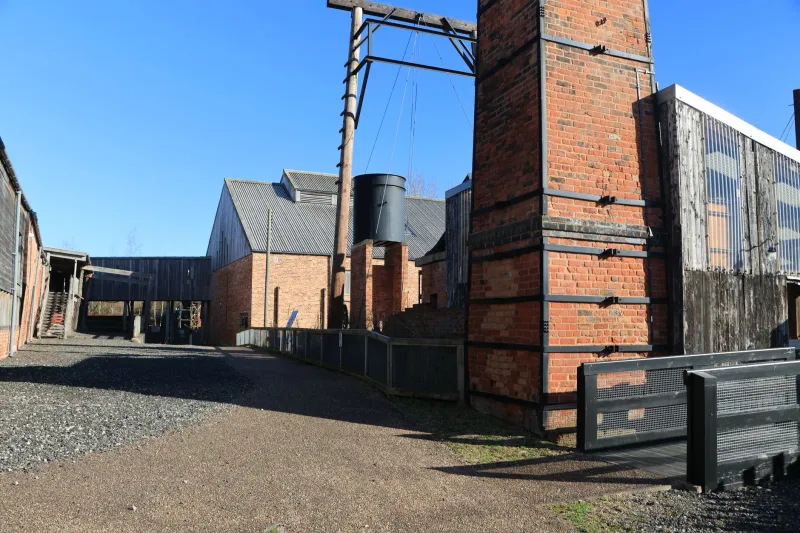
Somewhere in a modern office park on the edge of Dudley, a young solicitor is drafting a twelve-page non-disclosure agreement for a deal worth about four hundred quid. Meanwhile, down the road in a yard that's been in the same family since Attlee were in power, a bloke called Derek is shaking hands with his supplier over two hundred tonnes of structural steel and a mug of tea that could strip paint.
No paperwork. No legal fees. No three-week email chain with someone called Tarquin in compliance.
Just Derek's word. And Derek's word, as anyone round here will tell you, is absolutely bloody sufficient.
Your Rep Were Your Credit Rating
The Black Country didn't build itself on venture capital and pitch decks. It built itself on iron, sweat, and a social economy held together by something far more binding than any clause in any contract — the understanding that if you said you'd do summat, you did it. Full stop. No asterisks.
Margaret Holt, whose family has run a chain ironmongery and fixings business in Cradley Heath since 1961, puts it bluntly: "My granddad never signed a single thing in thirty years of trading. He'd have thought it were an insult. If you asked him to put it in writing, you were as good as saying you didn't trust him. And if you didn't trust him, you could sling yer hook and find somebody else."
That wasn't arrogance. It was a functioning system. In communities where everybody knew everybody — where your supplier's wife went to the same chapel as your mother, where your customer drank in the same tap room as your foreman — your reputation were a living, breathing asset. Damage it once, and you weren't just losing one contract. You were losing the whole network.
"Word travelled faster than any invoice," says Margaret. "Good or bad. You couldn't hide from it. So most people didn't bother trying."
The Handshake Economy in Practice
It's easy to romanticise this stuff, so let's be clear about what it actually looked like in practice. Factories changed hands. Suppliers extended credit running into thousands of pounds. Subcontractors took on months of work with nothing but a nod and a price agreed over the phone. Land changed ownership. Partnerships formed and dissolved.
All of it, routinely, without a single sheet of headed notepaper involved.
Ron Bissell, who ran a precision engineering firm in Tipton for over three decades before handing it to his son, recalls the culture with a mixture of pride and mild disbelief at how things have changed. "We had a supplier in Walsall we did six figures of business with every year for the best part of twenty years. Never a written contract between us. Not once. We'd agree a price on the phone on a Monday, the materials were with us by Wednesday. That were it."
When asked if it ever went wrong, Ron pauses. "Once. A bloke in Wolverhampton tried to wriggle out of a delivery price after the steel market moved. Turned up at the yard with excuses." He shakes his head. "We never used him again. Neither did anyone else we knew. He were finished in this area inside eighteen months. That's how it worked. The punishment were built into the system."
Why It Worked When It Shouldn't Have
From a purely theoretical standpoint, economists would tell you this shouldn't function. Contracts exist precisely because trust alone creates too much risk. And yet, for generations, the Black Country ran a significant chunk of its commercial life on exactly this basis — and largely thrived.
The reason, argues Dr. Priya Sandhu, a social historian at the University of Wolverhampton who has researched working-class economic networks in the West Midlands, comes down to community density. "These were tight geographic clusters with overlapping social ties — religious, familial, recreational. Breaking a business agreement didn't just have commercial consequences. It had social ones. You'd see the person you'd wronged at the pub. Your kids went to school together. The informal enforcement mechanisms were incredibly powerful."
She also points to a class dimension that often gets overlooked. "Working-class business culture in the Black Country was built on distrust of formal institutions — banks, solicitors, the courts. These were seen as systems designed by and for people with money. So communities developed their own parallel systems of accountability. The handshake wasn't naive. It was a deliberate alternative architecture."
The Paperwork Generation
Something shifted, of course. Ask any long-standing business owner in the region and they'll point to roughly the same era — the late eighties, early nineties — when the culture of formal contracts began muscling its way into everyday commerce. Some blame the banks, who started demanding documentation as lending criteria tightened. Others point to the rise of larger corporate customers with procurement departments staffed by people who'd never set foot in a foundry and wouldn't know a good-faith agreement if it bit them.
"The big supermarkets and the national contractors were the worst for it," says Ron. "Suddenly you needed to sign seventeen things just to get a meeting. And the contracts were all written in their favour. At least a handshake were equal. Both people were taking the same risk."
Margareth agrees. "The paperwork didn't make things more honest. It just made dishonesty more expensive to prove. There's a difference."
Still Alive, Still Graftin'
Here's the thing, though — it ay entirely dead. Not by a long stretch.
Talk to enough Black Country traders, builders, fabricators, and small manufacturers, and you'll find the handshake economy still ticking along underneath the surface. Deals still get done on trust between people who've known each other for decades. Favours get extended. Credit gets given. Work gets started before the purchase order arrives, because both parties know it's coming and that's enough.
"I still do it," admits Ron, without a flicker of apology. "With the right people. People I know. People my dad knew. You can tell in about thirty seconds whether somebody's the sort you can do business with that way."
That instinct — the rapid, almost unconscious assessment of a person's trustworthiness — might be the most undervalued business skill in the entire region. No LinkedIn profile captures it. No credit check replicates it. It's built from accumulated experience, community knowledge, and a cultural inheritance that stretches back to the forge floors of the nineteenth century.
The Code Endures
Modern business culture will keep pushing its NDAs, its due diligence checklists, and its arbitration clauses. And fair enough — the world's bigger and more complicated than it used to be, and not everyone operates in a community where your reputation follows you home.
But don't let anyone convince you the Black Country handshake was primitive. It was efficient, it was equitable, and in the hands of people who meant it, it was more binding than any contract a barrister ever drafted.
Derek's still out in that yard, by the way. Just sealed another deal. No paperwork required.
Some things, round here, don't need writing down.