Half Brummie, Half Roadman: The New Tongue That's Got Black Country Linguists Proper Vexed

Summat strange is happenin' on the streets of Dudley, Walsall, and Wolverhampton — and it ay just the potholes. A new generation of Black Country kids is mixin' centuries-old dialect with London drill slang, and nobody can quite decide whether to celebrate it or weep into their faggots.
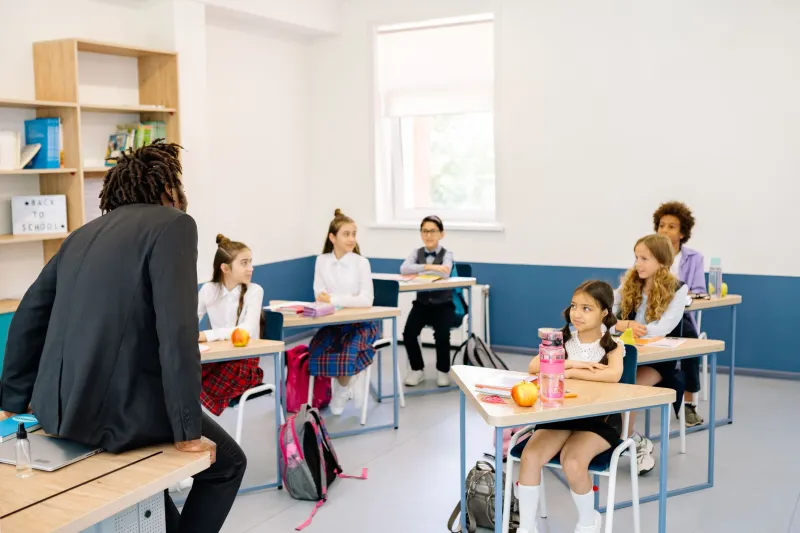
Walk past any secondary school gate from Tipton to Tettenhall on a Friday afternoon and keep yer ears open. You'll hear it. A lad callin' his mate "bruv" in an accent that could strip paint off a chain shop wall. A girl describin' summat as "bare bostin'" without a flicker of irony. Someone — and this is where it gets proper surreal — using the word "mandem" in the same breath as "yampy."
Welcome to the linguistic frontier nobody asked for, but everybody's got an opinion on.
The Sound of 2024, Black Country Edition
Seventeen-year-old Tyler from Sedgley — who'd rather we didn't use his surname because his nan reads this site, apparently — reckons there's nowt unusual about the way he talks.
"It's just how we speak, innit," he says, with the casual authority only teenagers can pull off. "Like, I'll say summat's 'dead on' one minute and 'no cap' the next. It dow mean I'm tryin' to be summat I ay. It's just... words, bab."
His mate Kezia, also seventeen, nods along. She grew up in Coseley but spends half her life on TikTok and Discord servers that span the entire country. "My nan says I sound like I'm from London when I'm on the phone to my mates. But when I'm at hers, I'm full-on Black Country. It switches, like. Always has done."
And that, according to the people who actually study this stuff for a living, is precisely the point.
What the Linguists Reckon
Dr. Priya Sandhu, a sociolinguist at the University of Wolverhampton who specialises in regional dialect shift, says what's happening across the Black Country is neither collapse nor catastrophe — it's code-switching, and it's as old as language itself.
"Young people have always adapted their speech depending on context," she explains. "What's different now is the sheer speed and reach of influence. Social media has effectively collapsed geographic distance. A fifteen-year-old in Brierley Hill is consuming the same content — the same music, the same memes, the same influencers — as a fifteen-year-old in Brixton. The linguistic bleed is inevitable."
What she finds genuinely interesting, though, is that Black Country dialect isn't simply being overwritten. It's doing the overwriting too — on its own terms.
"You're seeing Black Country grammar structures being applied to London slang vocabulary. Someone might say 'I cor be doin' with that, fam' — that's a Black Country negative construction wrapped around a London term of address. It's not erasure. It's fusion. And historically, that's how dialects survive."
The Nan Problem
Not everyone's quite so philosophical about it, mind.
At a community centre in Oldbury, a Tuesday afternoon craft group — which we shall charitably describe as the cultural heartbeat of the West Midlands — has Very Strong Feelings.
"It's all this bloody TikTok," announces Margaret, sixty-eight, without being asked. "My grandson come home last week sayin' something was 'lowkey bussin'. I thought he'd had a stroke."
Her friend Pauline, who has lived in Blackheath her entire life and sounds magnificently like it, is slightly more measured. "I dow mind them pickin' things up. We always did. But I just hope they dow forget where they come from. That accent — our accent — it's got history in it. It's got the bloody chain shops in it. It's got everything our families went through."
She's not wrong. The Black Country dialect is one of the oldest surviving regional accents in England, rooted in the speech patterns of Medieval Mercia and shaped by two centuries of industrial graft. Every "ay" and "cor" and "bab" carries the weight of the forge and the foundry. It ay just slang. It's archaeology you can hear.
Drill, TikTok, and the Algorithm's Role
So how did London drill culture end up in Dudley? Blame — or credit — the algorithm.
Drill music exploded across the UK in the early 2010s, initially centred on South London postcodes but rapidly spreading via YouTube, Spotify, and eventually TikTok. By the time Gen Z hit their teens, drill wasn't London's music anymore. It was everyone's music. And with music comes vocabulary, cadence, attitude.
Tyler — our Sedgley lad from earlier — listens almost exclusively to UK drill and Afrobeats. He also, when pushed, admits he loves a bit of Ozzy Osbourne because his dad plays it constantly. "Music's music, ay it," he shrugs. "Dow mean I'm from Peckham just 'cos I rate Digga D."
Kezia points out that the flow of influence goes both ways, even if it's harder to see. "Some of the lads in our year have proper started sayin' 'bostin'' as a joke, and now they just... say it. Like it stuck. Black Country slang is funny to people who ay from here, but then they start usin' it and it ay funny anymore, it's just theirs as well."
That, in a sentence, is how language spreads.
Evolution or Erasure? The Real Question
The worry — and it's a legitimate one — is that dialect fusion isn't always a two-way street. Prestige varieties of speech, whether that's Received Pronunciation or the cultural cachet of London urban slang, have a habit of edging out regional voices over time. The Black Country has already watched its industrial identity get stripped away decade by decade. The thought of losing its tongue on top of that ay a small thing.
But Dr. Sandhu pushes back on the doom-mongering. "If young Black Country people are choosing to retain elements of their dialect while also adopting new forms, that's an act of identity maintenance, not abandonment. The danger comes when people are shamed out of their regional speech — by schools, by employers, by wider society. That's when dialects truly die."
Which brings us, neatly, back to the school gates.
Because the kids mixing "mandem" with "mardy" ay doing it because they're ashamed of where they're from. They're doing it because they're from here — and here is connected to everywhere now, whether the craft group on a Tuesday afternoon likes it or not.
Spekin' Proper in a Proper Strange World
The Black Country tongue has survived the Industrial Revolution, two world wars, deindustrialisation, and approximately forty years of people from London telling us our accent sounds "funny." It'll survive TikTok.
What it needs — what it's always needed — is for people to keep usin' it. To not be embarrassed by it. To say "bostin'" in a job interview and not apologise for it. To let the kids mash it up with whatever linguistic flavour the internet's servin' this week, because that mashing is proof it's still alive.
Language that stops changin' is language that's already dead.
So let the teenagers say "bare bostin'." Let them code-switch between Coseley and Croydon. Let them be exactly where they are — young, loud, connected, and undeniably, stubbornly, gloriously Black Country.
Nan'll come round. She always does.