From the Forge to the Fortune: How Black Country Graft Built Some of Britain's Biggest Success Stories

There's a particular kind of stubbornness that gets bred into you when you grow up in the Black Country. It ay the sort that digs its heels in for no reason — it's the sort that looks at a half-empty workshop, a bank account that's seen better days, and a market that's already crowded, and thinks: right then, we'll just have to be better.
It's the same stubbornness that turned a region with no ports, no natural harbours, and no obvious geographic advantages into the workshop of the world. And it's the same stubbornness that's still quietly producing successful companies today — the kind that don't make a song and dance about it, because there's still work to be done.
Doe Brag, Just Deliver
If you want to understand Black Country business culture, you need to understand one fundamental truth: nobody here is interested in your pitch deck. What matters is whether the thing works, whether it's fairly priced, and whether you'll still be answering the phone in three years' time.
This philosophy — pragmatic, no-frills, relationship-driven — is precisely what's allowed so many Black Country firms to outlast their flashier competitors. While London-based startups were burning through venture capital on beanbag chairs and oat milk subscriptions, family businesses in Dudley and Walsall were quietly reinvesting profits into better machinery and keeping the same customers for forty years.
"My dad always said if you look after the work, the money looks after itself," says Karen Hollis, who runs a precision engineering firm in Brierley Hill that her grandfather founded in 1962. "We've never chased contracts we couldn't deliver. We've just done good work, shook hands, and the phone kept ringing."
Karen's company now employs 34 people and supplies components to clients across Europe. She's never taken outside investment. She's also never missed a payroll.
Metalwork to Megabucks: The Long Lineage of Making Things
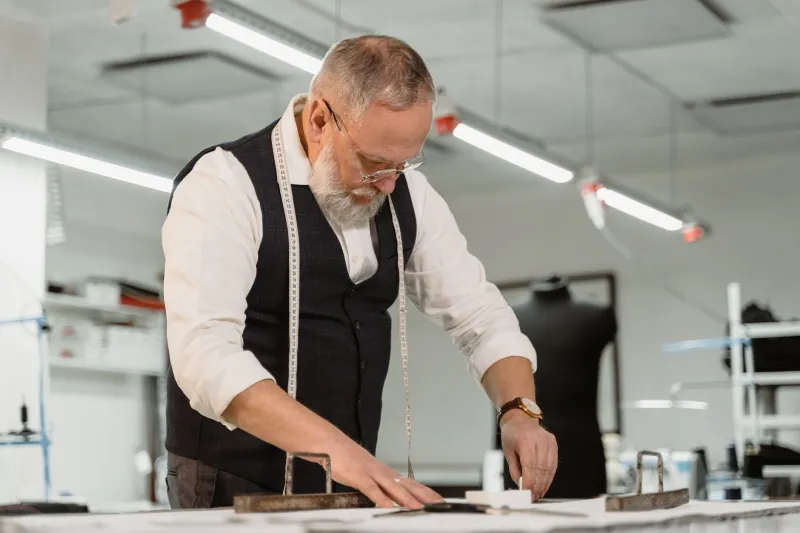
The Black Country's entrepreneurial DNA is inseparable from its industrial heritage. Generations of families who worked the chain shops, the glassworks, and the foundries didn't just learn a trade — they absorbed an entire philosophy of production. You understood materials. You understood tolerances. You understood what it cost to make something properly, and what it cost to make it badly.
That knowledge didn't disappear when the big factories closed. It migrated — into smaller workshops, into supply chains, into specialist niches that the large manufacturers had abandoned. Wolverhampton-based fabricator Dave Tromans started his steel stockholding business from a single yard in the late 1980s, during a period when, as he puts it, "everyone was telling us manufacturing was finished in this country."
"I thought, well, somebody's still got to make things," he says, with the measured delivery of a man who has heard that story go wrong for other people. "So I just kept going. Bought better equipment when I could afford it, took on good people, and didn't borrow what I couldn't pay back."
His company now turns over several million pounds annually. He still comes in at seven o'clock every morning.
The Community Advantage Nobody Talks About
One of the least-discussed competitive advantages that Black Country businesses have historically enjoyed is their embeddedness in tight local networks. This isn't networking in the LinkedIn sense — it's something older and more reliable. It's knowing that the bloke two streets over does quality electrical work, that the woman whose kids went to school with yours runs the best small haulage firm in the borough, that there's a handshake economy operating underneath the formal business world that keeps things moving when the official channels are too slow.
Jasmine Parmar, who founded a successful digital marketing agency in West Bromwich after a career in graphic design, credits this informal network with giving her early business a fighting chance.
"I didn't have capital. I didn't have contacts in the industry. What I had was people who trusted me because they knew my family, knew my work ethic, knew I wasn't going to mess them about," she says. "My first five clients were all local businesses. They gave me a chance because I was one of them. That foundation is everything."
Jasmine's agency now works with clients nationally, but she still keeps her office in West Brom. "Why would I move? This is where the roots are."
Tekkin' the Old Skills Somewhere New
Perhaps the most interesting development in recent years has been the way traditional Black Country craft values have found new expression in sectors that look, on the surface, nothing like metalwork or manufacturing.
There's a generation of Black Country entrepreneurs who grew up watching parents and grandparents apply meticulous skill and relentless attention to detail to physical materials — and who have simply applied the same discipline to software, food production, creative industries, and services. The medium changes. The mentality doesn't.
"My nan made jewellery components in her kitchen for a local firm for twenty years," says Liam Cutler, who runs a small but growing software development company in Stourbridge. "She used to say you could always tell quality work by feel. I think about that a lot when I'm reviewing code. The principle is the same — does it do what it's supposed to do, reliably, without fuss?"
Liam's company has just landed its largest contract to date, supporting a national logistics firm. He employs seven people, all local. He's hoping to take on three more by the end of the year.
The Quiet Confidence of the Black Country Way
What strikes you, talking to Black Country business owners across different sectors and generations, is a consistent absence of ego. There's pride, certainly — enormous pride in the work, in the region, in the people they employ. But there's very little of the performative self-promotion that characterises so much of contemporary business culture.
Nobody's writing a memoir. Nobody's doing a TED Talk. The assumption seems to be that if the business is good, people will notice; and if it ay, then no amount of personal branding will save you.
This isn't false modesty. It's a deeply practical worldview shaped by generations of experience in industries where the product either works or it doesn't, where the customer either comes back or they don't, and where your reputation is built slowly and lost quickly.
"We dow shout about ourselves," admits Karen Hollis, with a smile that suggests she's heard this observation before. "But we'm still here, ay we?"
She is. They all are. Quietly grafting, quietly growing, and proving once again that the best businesses aren't always built in the places that make the most noise.
Got a Black Country business story worth tellin'? Drop us a line at Black Country Gob — we'm always listening.