Cut Out the Middle Man, Keep the Coin: How Black Country Tradies Are Building Empires One WhatsApp Message at a Time
There's a bloke in Tipton — we'll call him Daz, because that's his name and he's not shy about it — who three years ago were grafting sixty hours a week for a building firm and tekkin' home less than he spent on diesel. Now he runs his own plastering operation, books six weeks ahead, charges what he's worth, and turns down work regular as a Monday mornin' moan. The difference? He stopped waiting for someone else to hand him his fair share and started telling his own story.
"I were doing the same job," Daz says, scrolling through his phone to show a reel of a fresh skim coat that got four thousand views on Instagram. "Same hands, same skill, same quality. But when I worked for the firm, the firm got the rep and I got the wage. Now I get both. Took me two years to work out I were the product all along."
Daz is far from alone. Across the Black Country — from the terraced streets of Oldbury to the industrial estates of Brierley Hill — a generation of tradespeople are doing something their granddads would've called daft and their dads would've called brave. They're ditching the middlemen, building their own customer bases, and pricing their labour like the skilled artisans they actually are.
The Old Model Were Rotten from the Start
Let's not romanticise the way things used to work, because the old way were never particularly fair. The Black Country built Britain — the chains, the anchors, the ironwork, the glass — and the people doing the grafting have always had to fight to keep a decent cut of what they produced. The industrial model handed the profit upward and left the worker with enough to get by, if they were lucky and didn't kick up too much of a fuss.
That model limped through the twentieth century and staggered into the twenty-first wearing a high-vis jacket and calling itself a subcontracting arrangement. Agencies tekk their slice. Firms tekk their margin. The bloke with the tools in his hands tekks the blame when owt goes wrong and a fraction of the credit when it goes right.
What's changed isn't the skill. What's changed is the means of telling people about it.
Your Accent Is an Asset, Bab
Here's the thing nobody in a marketing seminar will tell you, but any Black Country tradie who's built a following already knows: authenticity sells, and round here, authenticity sounds like summat specific.
Kyle, a plumber from Netherton who runs a TikTok account that'd make some influencers weep with envy, puts it plain. "I just film what I'm doing and talk like I talk. I don't put on a voice. I don't pretend I went to college. I say 'that's bostin'' when a job comes out right and 'that's a right cock-up' when it ay, and people love it because it's real."
His videos — drains unblocked, boilers explained, the occasional rant about cowboys who've bodged a job before him — regularly pull tens of thousands of views. More importantly, they pull paying customers. Not the kind who want the cheapest quote. The kind who've watched him work for six months on their phone and already trust him before he's knocked the door.
"I get messages saying 'you're the only plumber I'd let in my house,'" Kyle says. "And I ay even been to their house yet. That's mental, that is. But it's also just... marketing, innit?"
Welders, Joiners, and the Premium Reputation
It's not just the trades that deal in emergency callouts. Custom fabricators and bespoke craftspeople are finding that going direct — and going loud about it — transforms what the market will bear for their labour.
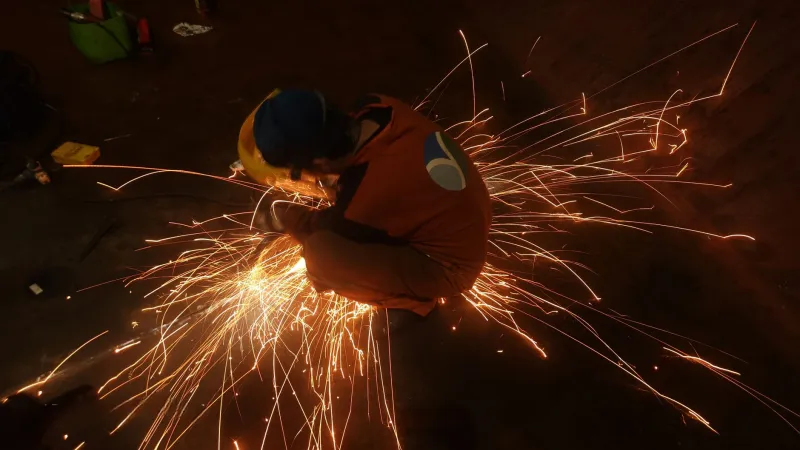
Shaz runs a small welding and metalwork outfit from a unit in Wednesbury. She makes everything from bespoke garden gates to custom furniture brackets, and she were sick of watching the companies she supplied to sell her work at three times what they paid her for it. She started photographing every finished piece. Started posting. Started showing the process — the sparks, the grinding, the measuring twice and cutting once — and suddenly people weren't just buying the product. They were buying the story of the product.
"There's a gate in a garden in Sutton Coldfield," she says, not without some satisfaction, "that the bloke paid me direct for. He found me on Instagram. He didn't go through a landscaping firm or a garden centre or owt. He saw my work, he messaged me, and we did business. I got the full price. He got a better gate than he'd have got otherwise. Nobody in the middle got owt."
The premium, she explains, comes from proof. Photos. Videos. Reviews. The accumulation of visible evidence that you're the real thing. And in a region where craft heritage runs bone-deep, that evidence carries weight.
Word of Mouth, But Make It Digital
Word of mouth has always been the Black Country tradie's best advertisement. Ask anyone who's tried to find a decent sparky or a reliable chippy round here — they ay looking in the Yellow Pages. They're asking their mom, their neighbour, their mate from the pub. The reputation economy has always existed. What's shifted is the radius.
WhatsApp groups that started as local community chats have become informal referral networks with hundreds of members. Facebook groups for local areas carry more trusted tradespeople recommendations than any directory. And the tradies who've cottoned on are making sure their name comes up — not by paying for ads, but by showing up, doing good work, and making it easy for satisfied customers to share.
"I've got a group of about forty regular customers," says Marcus, a joiner from Cradley Heath who specialises in fitted furniture. "When one of them needs summat done that ay my trade, I recommend someone I trust. They do the same for me. We've all cut out the agencies and we're all busier than we've ever been. It's just a network, like it always was. Just faster now."
Not Without Its Complications
It'd be daft to pretend this shift is all plain sailing. Going direct means handling your own admin, your own invoicing, your own insurance, your own tax returns — all the stuff the firm used to sort while you were on the tools. Some tradies have flourished at it. Others have found themselves drowning in paperwork at nine o'clock on a Sunday night and wondering if the agency wage were simpler after all.
There's also the matter of the race to the bottom. Not every customer who bypasses the middleman is doing it to support a skilled tradie. Some are doing it to haggle. The tradies who've succeeded in building a premium brand are the ones who've learned — sometimes the hard way — that not every job is worth taking and not every customer is worth having.
But the direction of travel is clear. The Black Country has always known how to graft. It's learning, finally, how to get properly paid for it.
And if that means Daz from Tipton's plasterwork is going viral while his old gaffer's phone stays quiet? Well. That's bostin', that is.