From the Rag Pile to the Runway: How Black Country Folk Were Thrifting Before Thrifting Were a Thing
There's a woman in Cradley Heath who has never — not once in forty-odd years — paid full price for a coat. Her name's Maureen, she's sixty-three, and she looks absolutely bostin'. Her living room is a masterclass in what the interiors crowd now call 'eclectic maximalism.' What they mean is: it looks like a proper home, full of proper things, with a proper story behind every single piece. Maureen calls it Tuesday.
"I've been going to the Sue Ryder in Stourbridge since before some of these TikTok kids were born," she tells me, pulling out a camel wool coat she found for £3.50 sometime around 2004. "Back then, people looked at yer funny if yer said where yer got summat. Now they look at yer funny if yer didn't get it second-hand. Funny old world, ay it?"
Funny old world indeed. Because what was once the quiet, slightly-stigmatised ritual of the Black Country working class — the Saturday morning car boot, the Thursday rummage through the British Heart Foundation bins, the triumphant emergence from a church hall jumble sale clutching a barely-worn M&S cardigan — has somehow become the hottest trend in sustainable fashion. And the Black Country, as per usual, did it first and got absolutely none of the credit.
The Original Circular Economy (We Just Called It 'Gerrin a Bargain')
Let's be honest about where this all comes from. The Black Country wasn't built on waste. The whole region was forged — literally — from the idea that nowt gets thrown away if it's still got use in it. You mended your tools, patched your clothes, passed your furniture down through three generations and then sold it at a car boot when the fourth generation decided they wanted something 'modern.' That sensibility didn't come from a sustainability podcast. It came from necessity, from graft, and from a deeply ingrained cultural belief that chucking something out before its time is a form of moral failure.
Sharon from Tipton, who runs a popular stall at the Wednesbury car boot every Sunday, puts it better than any think-piece could: "Me mom taught me that waste is disrespectful. You respect the thing, you respect the money that bought it, you respect the next person who might need it. It's just common sense, bab."
She's been doing this for twenty-two years. She now has a waiting list for her better pieces.
The Social Bit Nobody Talks About
Here's what the glossy sustainability write-ups always miss: for Black Country folk, the charity shop and the car boot weren't just shopping destinations. They were social infrastructure. On a Saturday morning in Brierley Hill or Netherton, the car boot sale was where you caught up with the neighbour you hadn't seen since the school run, where your nan haggled loudly over a bread bin and everyone within earshot had an opinion, where you bumped into someone who knew your uncle and ended up staying two hours longer than planned.
It were community, dressed up as commerce.
That social dimension is something the influencer-led 'thrift haul' culture has genuinely struggled to replicate. You can film yourself pulling a vintage denim jacket out of a Depop parcel all you like, but it's not quite the same as standing in a draughty community centre in Halesowen at half eight on a Sunday morning, clutching a polystyrene cup of tea, while a bloke argues passionately that his broken lawnmower is worth a tenner.
When the Posh Kids Discovered What We Already Knew
Somewhere around 2015, charity shopping stopped being something people did quietly and started being something people photographed. The rise of 'thrift flipping' on YouTube, the explosion of Depop and Vinted, the Guardian think-pieces about 'vintage curation' — all of it pointed back to practices that working-class communities across the Black Country had been doing for generations without anyone asking for their input.
And look, nobody here is going to begrudge the trend. More people buying second-hand means less landfill, and that's a good thing full stop. But there is something faintly maddening about watching the same habit that once got your kid teased for wearing 'jumble sale shoes' get repackaged as a personality trait for people who've just discovered that Oxfam exists.
Kieran, twenty-four, from Dudley, has been building his wardrobe from charity shops since he were a teenager — not because it's cool, but because it were what made sense on a Saturday job wage. "I used to not tell people where I got stuff," he admits. "Now everyone wants to know. My mate from uni acts like I've cracked some secret code. I'm like, mate, this coat's from the Age UK in Sedgley. It's not a vibe. It's just a coat."
But here's the thing about Kieran: his eye is excellent. Years of rummaging have given him a working knowledge of fabric quality, stitching, and brand heritage that most fashion students would kill for. He didn't learn it from a YouTube tutorial. He learned it from his mom, who learned it from her mom, who probably learned it in a market stall sometime in the 1970s.
The New Gatekeepers (And Whether That's a Problem)
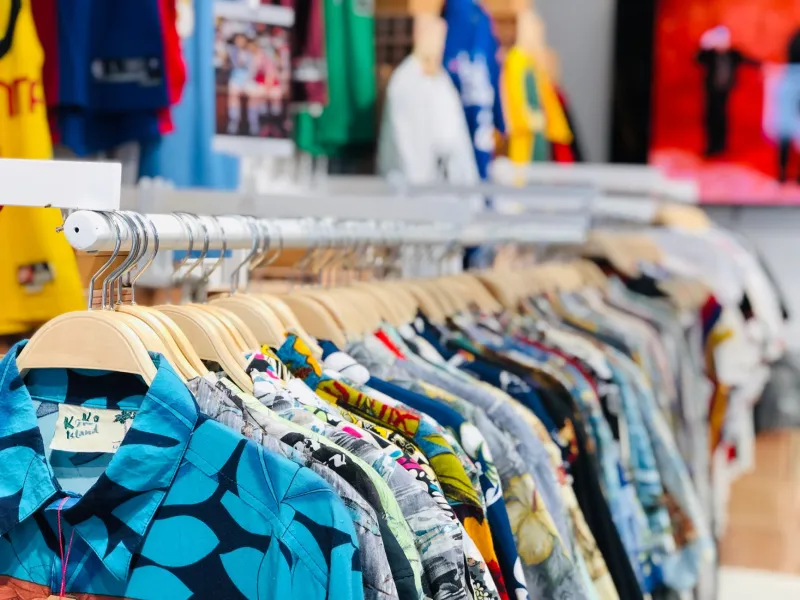
There's a conversation to be had — and it's a prickly one — about what happens to charity shop prices when thrifting goes mainstream. Anyone who's been in a Cancer Research in a gentrifying area lately will have noticed that a pre-loved Next blouse now costs £8.99 and someone's had the nerve to display it on a little wooden hanger like it's Selfridges.
For families who need those shops to stretch a budget, that shift matters. It's not just aesthetics — it's access. And while the Black Country's charity shop scene remains, largely, refreshingly unpretentious, there's a watchful eye being kept on the direction of travel.
"As long as the prices stay sensible, everyone can play," says Maureen, rewrapping her camel coat carefully. "The minute it becomes a luxury, it stops being what it were meant to be. And what it were meant to be was useful. For everyone."
Long May the Rummage Continue
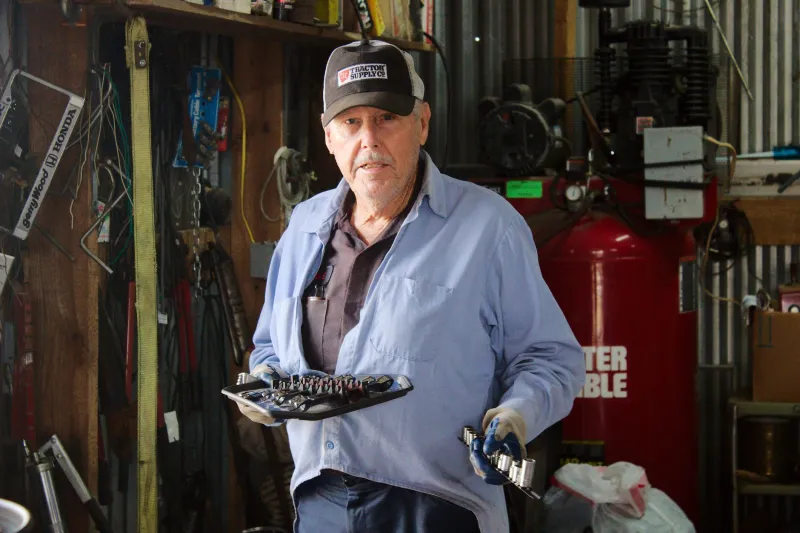
So here's to the car boots and the church hall jumbles and the slightly chaotic YMCA shops where nothing is organised by size but everything is 50p. Here's to the Black Country women who built entire wardrobes on next to nothing and looked magnificent doing it. Here's to the blokes who found a perfectly good socket set for £2 and the kids who scored a vintage football shirt they didn't even know they wanted.
The rest of the country can have its 'thrift era.' The Black Country's been in its thrift era since before anyone were using that word.
And we've got the receipts. Or rather — we've got the lack of them, because cash in hand, no questions asked, that's how the real ones do it.
Got a charity shop score that deserves a shout-out? Drop it in the comments. Bonus points if it cost less than a fiver and someone's complimented it since.